Seven years ago, while living in the West End, I started this blog. Excited by the number of new residents moving in, businesses opening, and the surging homes prices for homes being renovated in the area, I wanted a way of documenting the progress. Then I moved to New Orleans, and then Miami, and then Baltimore. And finally, in 2022, I returned to Atlanta, and last August, I began renovated a 1920s bungalow in English Avenue. I am amazed at the progress of the historic neighborhoods west of Downtown Atlanta.
So here’s a rundown of where I see things in 2025:
English Ave & Vine City
Vince City is benefitting from the development projects in the Gulch, the revitalization of MLK Drive, and major development projects along Boone Blvd including new a slew of new housing under construction. Rodney Cook Park, the entrance to the Beltline Westside Connector, and the new Insignia Hilton Hotel will help to soften the transition from Ivan Allen Jr. Blvd to Joseph E. Boone Blvd at Northside Drive.

Two of the most exciting projects I see are The Simpson, a 139 unit mid-rise apartment building which is being erected at 810 & 840 Boone Blvd, and a mixed-use development across the street at 839 Joseph E. Boone, which will include 33 units of multifamily and 1200 square feet of retail space.
English Avenue is BOOMING! One of the most exciting projects is the Modern Westside Trail which is coming alive on North Avenue and Northside Drive. This midrise apartment building is almost done, and will feature 373 studio, one, two and three-bedroom homes, and feature “expedient access to the Westside Trail of the Atlanta BeltLine and the various eclectic attractions within West Midtown.” Just next door to the Modera will be Avenue, a new restaurant/bar/lounge concept, Sibi Chalil Cherian, who also owns Vision Lounge.
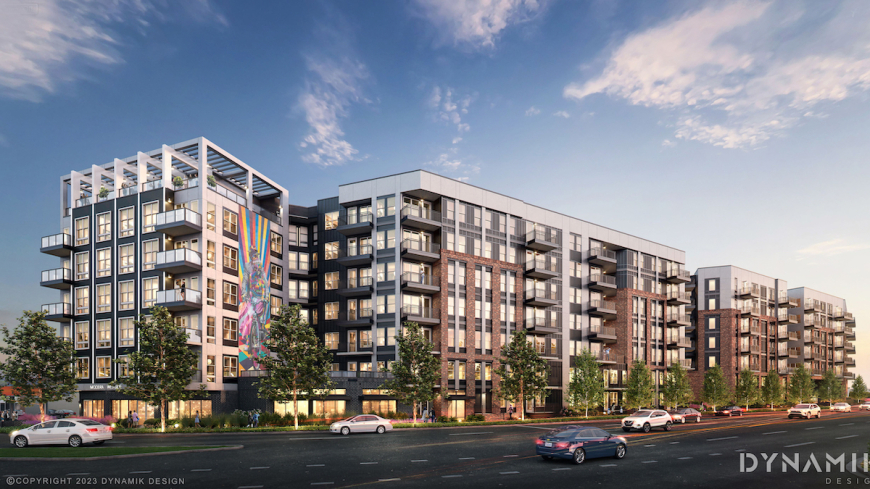
English Avenue is also benefiting from developments along the Beltline like Echo Street West and Westside Motor Lounge, and the westward expansion of Georgia Tech called Science Square, and the redevelopment of the former Herndon Homes public housing project with new mixed income and senior housing called Herndon Square. As part of this redevelopment, a new supermarket is slated to be built at the corner of Cameroon Alexander Blvd and Northside Drive.
AUC, Ashview Heights & Washington Park
I’ve always been fond of Washington Park. When I was a student at Morehouse College, I tutored at Washington High School and lived in a boarding house next the white store on Ashby Street. I would walk past street walkers and grim reapers to get two filet-o-fish from Mcdonald’s on MLK and Lowery Blvd. I remember going to a Black Greek picnic in Washington Park. I remember when the Walmart was a Publix and the original Pascal’s Motor Hotel was still open. Before it closed completely, Clark Atlanta University used it as an overflow dorm for its students. So, I’ve seen the FULL progression of the area.
When I last lived in Atlanta, the Beltline’s Westside trail stopped at Lena Street, right in front of Washington Park, but there’s new a section between Lena Street and Mayson Turner that just opened, and construction is underway to connect the trail to existing segments and bring this section of the Westside into the fold. This northern segment runs for about 1.3 miles, starting from the existing Westside Trail terminus at Lena Street and extending north to Law Street, where it will tie into Westside Trail—Segment 3 and the Westside Beltline Connector.
The Walmart has reopened; I’m still not a fan. This stretch of MLK, with all its storefronts has so much potential. In the near future, I expect it to have the feel of an Edgewood Ave where AUC students, neigborhood residents, and visitors can eat, stroll, and shop. This corridor is within walking distance to the Mercedes Benz Stadium, and could be an asset during the World Cup in 2026.
West End & Westview
Sadly, the West End Mall has finally closed. I remember shopping at Maxway and going to the RadioShack all the way at the end. The American Deli in the West End Mall was not to be played with! But the redevelopment of this parcel has been a plan for a looooooooong time. So, what’s to come is new live, work, play development called “One West End.”

According to the developers, One West End will be a mixed-income, mixed-use development. Commercial space will include: 125,000 square feet of retail, with a grocery store, fitness center, food & beverage experiences, and local boutiques. Residential space will include: 800+ rental and student-targeted housing units; mixed-income rental housing, with 70% workforce and 30% affordable; and a hotel. Community amenities will include a public green space, fitness center, resident lounge, and bike parking. The multi-year redevelopment process is expected to begin in 2025, with Phase One completion slated for 2028.
In my next post, I’ll break down what I see happening in Mechanicsville, Pittsburgh, Castleberry Hill and South Downtown.
 ATL Downtown West