Loft office, Artist studios, Coffee shop, & Affordable Housing Slated for Adair Park

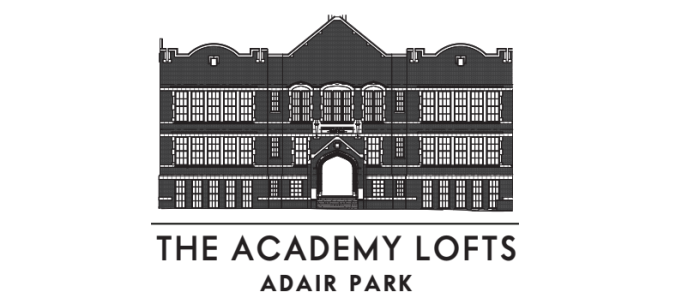
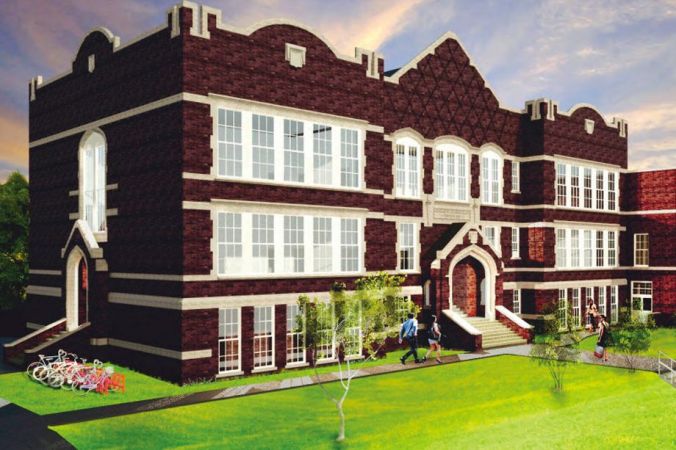
Adair Park is the latest Downtown West neighborhood to receive some much needed economic development and housing. After years of fighting with Atlanta Public Schools over control of an abandoned schoolhouse in Adair Park, the century old building will be renovated and become The Academy Lofts.

Academy-Drawing.jpg-2

The Academy Lofts are slated for completion in early 2019.

According to Curbed Atlanta, in addition to 5,000 square feet of loft offices for small businesses, artist studios and a 1,300-square-foot coffee shop, the historic redevelopment project will create 35 “micro-units” of affordable “art-force” housing (reserved for artists)—and is utilizing a $1.5-million grant from Invest Atlanta as part of the Housing Opportunity Bond Program—in order to maintain affordability into the future. Funding will also come through historic tax credits.

Adair_Park_School.png.0

Slated for completion in early 2019, the project is using local developers, Stryant Investments and Building Insights who have partnered with arts nonprofit The Creatives Project to bring new life to the school, which has been abandoned for nearly 45 years. The auditorium will be converted into an art gallery and community events space.

Neda Abghari, executive director of the Creatives Project, said the concept is the first of its kind in the City of Atlanta. Read more and see renderings …

Why Atlanta’s Affordable Housing Crisis Wont Get Fixed by Mary Norwood

Mary-Norwood-croppedMary Norwood lives in Buckhead and describes herself as “independent” in a city where much of the permanent public affordable housing was torn down and not replaced. She is not the best candidate to address the city’s affordable housing crisis. She’s out of touch, insensitive, and lacks the experience (Norwood had not even ever chaired a city council committee until he most recent term in office) to lead a city as large and complex and Atlanta.

On Gentrification

Mary Norwood just won’t stay out of the West End. Is she there to court black voters? Perhaps she is there to introduce herself to the many new white residents of this historically African American stronghold community. Or both. Either way, Norwood has to be aware of the rapid gentrification of Southwest and Northwest Atlanta, and the housing affordability crisis which has left many former  black “intown” residents displaced and priced out of their beloved communities. Perhaps that’s why Ms. Norwood sat down to discuss the issue of gentrification with the Buckhead Coalition. We all know how familiar the Buckhead community is with the issues going on on the Westside (side eye).

On Affordable Housing…

During a Mayoral Candidate Survey on Affordable Housing taken in July 2017, candidates were asked to rank issues in importance to Atlanta’s future. Only Ceasar Mitchen and Sen. Vincent Fort ranked housing affordability as the most important issue.  Mary Norwood gave it a 6. Mary Norwood  In fact, Ceasar Mitchell is the only candidate to make mitigating displacement and preserving existing affordable housing his top and immediate priority.

On Homelessness

Atlanta’s homeless are not criminals. Not having a place to live is not a crime; its a tragedy.  Last month, Ms. Norwood attended a candidate forum sponsored by the City for All Housing Coalition and the Transformation Alliance. When asked about what to do next in addressing homelessness and ensuring affordable housing, her response was:

“One of the problems with supportive housing is, people say, ‘I don’t want that in my neighborhood,” Norwood said.  “So it needs to come with security; it needs to be a well-run facility.  Everyone knows what being a good neighbor means. Being a good neighbor is not the kind of neighbor that Peachtree-Pine has been all these years. Lots of great intentions there, but it just hasn’t been a good neighbor.  I think we all understand what that means.”

So instead of talking about real solutions, funding, and creating a division of homeless services, she complained about the unsightliness and undesirability of homeless shelters and how they should be run more like jails or halfway houses????

At an Atlanta mayoral forum sponsored by V103 earlier this month, Norwood  and other candidates were asked about their plans to increase affordable housing in the city. While Mitchell  said he’d “create at least 20,000 affordable housing units in this city,” Ms. Norwood, who drives a Lexus sedan and lives in the poshest section of the city, skated around the issue.

A candidate who does not have clear answers and solutions to this city’s biggest problems is not the person to fix said issues. She has struggled to denounce Trump, paused on answering questions about racial profiling, and is way off on how best to tackle the affordable housing crisis.

AtlDowntownWest endorses current City Council President Ceasar Mitchell. He has lived in Southwest Atlanta (West End) for over 20 years, is passionate and informed about fixing this city’s biggest and growing problem –housing.
Several New Affordable Homes Headed for English Avenue

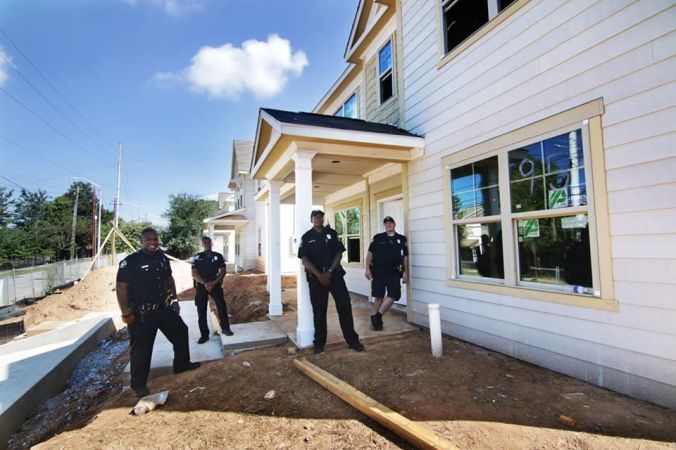
After the successful construction of 5 affordable homes along James P. Brawley Dr. NW in Vine City earlier this year (Phase I), the Atlanta Police Foundation has embarked on an even more ambitious project in neighboring English Avenue. In Phase II, a total of 20 newly constructed homes are planned for police officers and long-time neighborhood residents.

Griffin_Street_Apartments

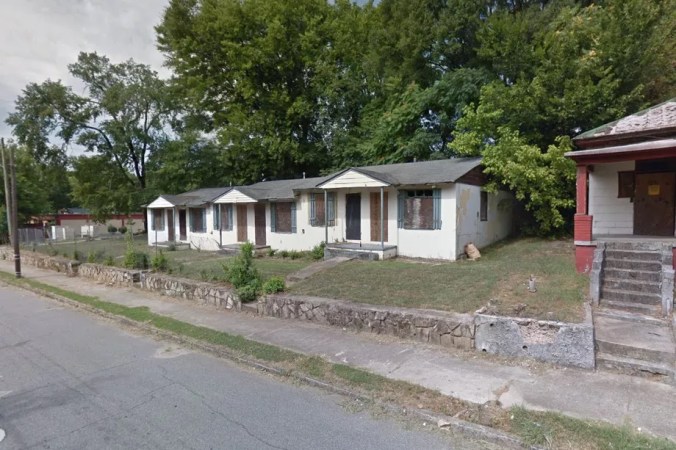
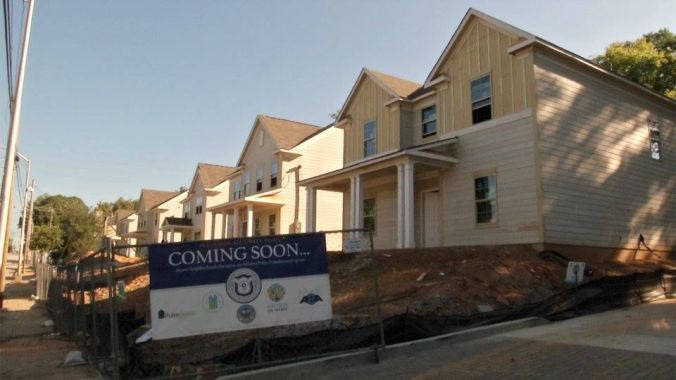
Blighted apartments on Griffin Street have been demolished for new construction.

Demolition has already been completed of previously dilapidated homes and work is underway on Griffin Street to build several new homes for police officers and legacy residents, according to the Atlanta Police Foundation. The initiative, known as Secure Neighborhoods, is supported by the City of Atlanta, the Arthur M. Blank Family Foundation, and Westside Future Fund and is targeted towards three specific neighborhoods: Vine City, English Avenue, and Pittsburgh.

14657314_1843128382583026_3256136458837894640_nIn addition to removing blight and adding new residents to the Historic Westside communities, the Secure Neighborhoods programs seeks to increase police visibility, build connections between police and neighbors, and provide housing options for officers.  And its already seeing success; the Westside has seen a significant reduction in crime.
The organization is based on a public-private partnership model that has worked to secure and leverage private resources to fund high priority projects designed to enhance the City of Atlanta’s ability to fight and prevent crime. As a result of the work of the APF, since 2003 there has been an increase in the number of police officers on the streets and an increase in the engagement of Atlanta’s business community and neighborhood residents in fighting crime. Additionally, the City has experienced a 58 percent reduction in the violent crime rate and a 41 percent reduction in crimes overall.

14720542_1843136982582166_3560788328946588158_n

Another 10 homes are expected to be built as part of phase III in 2018. By 2020, the project will have constricted 35 new homes in downtown west.


Another New Park to Be Built in Vine City

It is being reported that a 4 acre park, Boone Park West,  will be built in Vine City.  This is the second park to be announced this year.  This past spring construction began on the Rodney Cook Sr. Park.

Boone Park West Compile (1).JPG

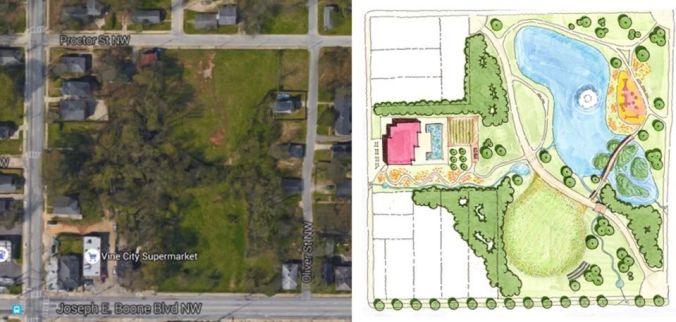
Boone Park West sit at the intersection of Oliver St. NW and Joseph E Boone Blvd. 

Construction of Boone Park West  will include the conversion of  a collection of abandoned and neglected parcels into a “positive, vibrant, and transformative public space” that engages the community in green infrastructure solutions, increases public access to recreational opportunities, provides jobs and training for residents, improves environmental quality, and reduces negative impacts of stormwater runoff, according to a report by Park Pride.

Curbed Atlanta and Saratoga Report both reported that the plans to create Boone Park West in the Proctor Creek Watershed. The plans show the proposed site will carve out space for the future home of the Atlanta Urban Ecology Resource Center (AUERC).

The new park is just one of many within the watershed that could help address issues of flooding in neighborhoods like English Avenue and Vine City. One of the primary purposes of Boone Park West is to control localized flooding around the park site and provide capacity relief for the sewer system around this westward edge of Downtown  Atlanta.

According to Park Pride officials, the park will be the third on the westside (after Vine City Park and Lindsay Street Park) built as part of the Proctor Creek North Avenue Vision for Green Infrastructure study completed in 2010.

Said officials in a release: “A key component of Boone Park West will be a green infrastructure amenity designed to capture, clean, and infiltrate at least 37,500 cubic feet of stormwater runoff from the surrounding streets, mitigating the recurrent flooding that has historically plagued these neighborhoods.”

Cranes rising in Vine City: New Park; Affordable Senior Housing; Bike Lanes

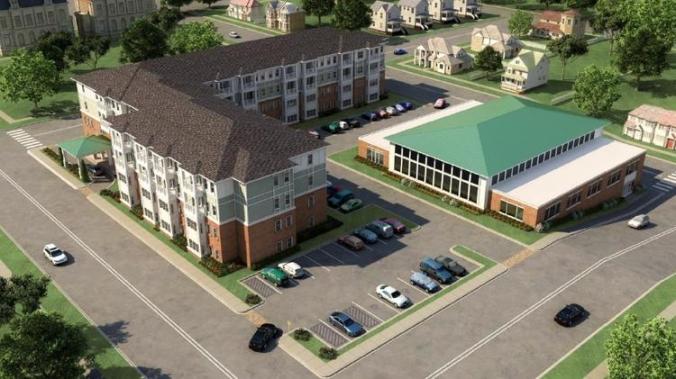
Invest Atlanta is forging ahead with its plan to bring more affordable housing to the downtown neighborhood that sits in the westward shadow of the almost finished billion dollar Mercedes-Benz Stadium.  At a recent board meeting, Invest Atlanta approved a $10 million bond resolution to fund the construction of 105 units of senior housing in Vine City. The 105-unit Oasis of Vine City complex will be reserved for seniors above the age of 62, who will pay no more than 60 percent AMI. The units will all be affordable and high quality, with amenities such as energy efficient appliances, pre-wired security, and a fitness center.

oasis-vine-city-750xx848-477-8-0.jpg

This project has been in the works for almost 5 years. This year, much emphasis has been placed on ensuring that long-time residents are not pushed out of some of Atlanta’s poorer historic westside neighborhoods. In April, Mayor Kasim Reed announced the Anti-Displacement Tax Fund, a program funded with corporate and philanthropic dollars to help residents in  Vine City, English Avenue, Ashview Heights and the Atlanta University Center area pay increasing rents and tax bills as their property becomes more valuable. the ADTF will be run by the Westside Future Fund and hopes to raise $5 million.

As many SW Atlanta residents recently received property tax assessments that are double and triple that of last year, the need for stable, affordable housing on the Westside is more important now than ever. Oasis of Vine City should enable these long-time residents to age in place in their communities. Additional funding for the project will come from a variety of sources, including Georgia’s Department of Community Affairs, the Vine City Trust Fund, and affordable housing tax credits.

Last month, the city and civic leaders also broke ground on a new park in Vine City.

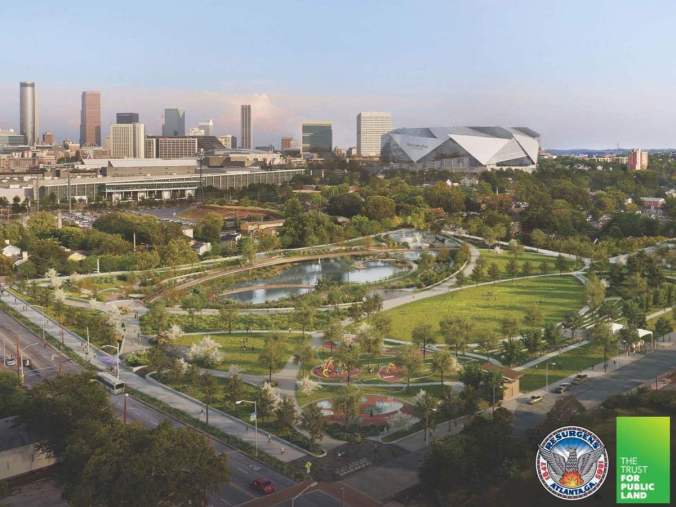
cook_park_renderings-1

Construction has begun on Rodney Cook Senior Park, a $45 million public-private project that is sure to trigger a rebirth of Vine City and surrounding neighborhoods. The 16-acre park will feature a playground, picnic pavilion, multi-use courts for sports, a boardwalk and terraced pools. The park will also feature 18 statues of Georgia civil rights leaders and others who were considered peacemakers throughout the state’s history.

Scheduled to open Summer 2018, Rodney Cook Sr Park will also have a retention pond.

Along Simpson Rd Joseph E. Boone Blvd, city contractors have begun construction work on the Boone Boulevard Green Infrastructure & Capacity Relief Project which includes reducing the roadway to two lanes and the addition of bicycle lanes between Northside Drive and Mayson Turner Road. Work will begin east of the Joseph E. Boone Boulevard and Joseph E. Lowery Boulevard intersection. Once complete, the Boone Boulevard Green Infrastructure & Capacity Relief Project will help manage stormwater and increase sewer capacity in the area.


West End Set to Map Out its Future with Newly Approved Community Improvement District

Last week, the West End received another victory when the Atlanta City Council approved the formation of the West End Community Improvement District.

CIDs are self-taxing business districts wherein commercial property owners agree to pay a tax to fund a variety of improvements such as transportation upgrades, the widening of sidewalks, intersection and parking upgrades, pedestrian and bicycle paths, streetscapes, more green space, or private security.

Sponsored by Councilmember Cleta Winslow, she said the idea of a CID for the West End developed eight years ago as the community suffered through the economic downturn of the Great Recession. The West End CID will be governed by a six-member board.  However, the timing of the formation/approval — just months before Winslow faces reelection is curious. She faces strong competition from commercial real estate broker and former West End Neighborhood Development president, Kimberly Parmer as well as Elizabeth Whitmore, a CAU graduate and active Westside community resident.

The CID has the support of both the West End Merchants Coalition and Central Atlanta Progress, a private, not-for-profit corporation that strives to create a robust economic climate in downtown Atlanta.

The boundaries of the West End CID include Martin Luther King Jr. Drive to the north, Lee Street to the east, White Street to the south and west. It also includes the Atlanta University Center.

The West End has long maintained a strong commercial base surrounding the Mall at West End. In the past year, several new businesses have opened near or along RDA/Cascade corridor including 992 Gallery, 640 West Community Cafe, and Live Edge Restaurant Bar. And the newly inked CID is poised to be well funded, as the multi-million dollar Lee+White Development has already brought with it the announcement of several new tenants who will pour millions in investment into the West End economy.

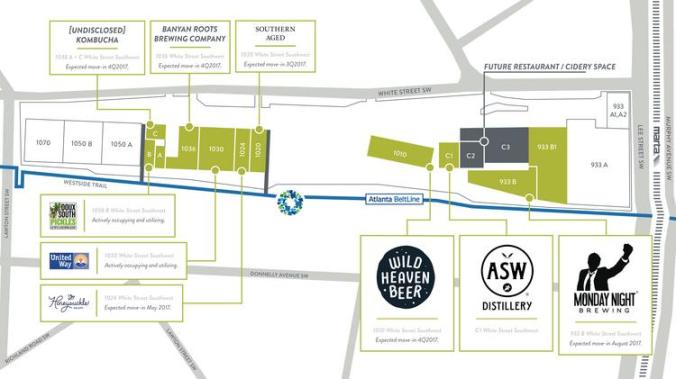
In September 2016, it was announced that Monday Night Brewing would anchor the $30 mil project on White Street, which will be included in the CID. Since then ASW Distillery, Southern Aged, and Wild Heaven Beer all announced plans to occupy part of the 55,000 sq ft project which faces the almost finished Westside Beltline Trail.

asw-distillery-lee-white-site-plan-west-end-barrel-house-with-monday-night-750xx2212-1244-94-0

According to a report by the Council for Quality Growth, quoted in an article published last week in the AJC, “by utilizing self-imposed tax revenues from commercial businesses within their districts, CIDs are dramatically changing their communities in many ways.” The Council for Quality Growth, a metro Atlanta non-profit trade organization that works to ensure the region’s regulatory environment supports quality growth and development.

westend

Emphasis must be placed on providing  increased security and lighting in the heavy commercial corridors. Additionally, young entrepreneurs and residents have repeatedly expressed concerns about the diminishing opportunity to start a business in the area. Commercial rents for most spaces hover above $1600 a month. Funds should be set aside for the creation of entrepreneurship hubs that provide retail spaces at reduced or subsidized rents and support growth of small local business persons.