After the successful construction of 5 affordable homes along James P. Brawley Dr. NW in Vine City earlier this year (Phase I), the Atlanta Police Foundation has embarked on an even more ambitious project in neighboring English Avenue. In Phase II, a total of 20 newly constructed homes are planned for police officers and long-time neighborhood residents.
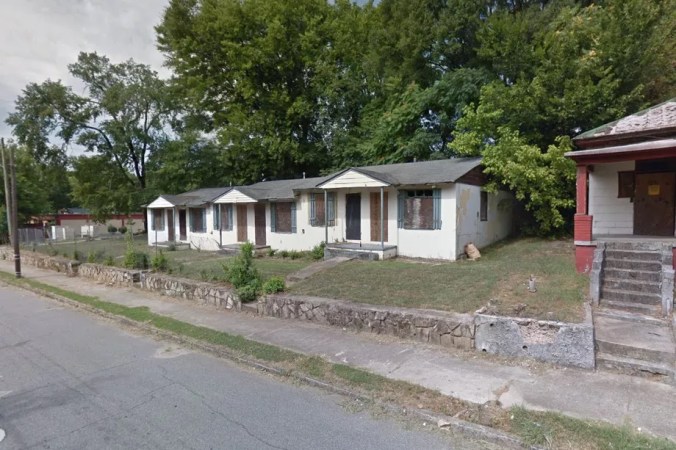
Blighted apartments on Griffin Street have been demolished for new construction.
Demolition has already been completed of previously dilapidated homes and work is underway on Griffin Street to build several new homes for police officers and legacy residents, according to the Atlanta Police Foundation. The initiative, known as Secure Neighborhoods, is supported by the City of Atlanta, the Arthur M. Blank Family Foundation, and Westside Future Fund and is targeted towards three specific neighborhoods: Vine City, English Avenue, and Pittsburgh.
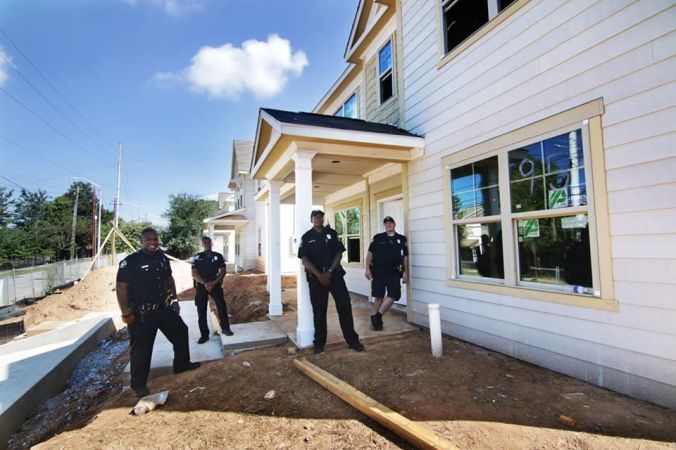 In addition to removing blight and adding new residents to the Historic Westside communities, the Secure Neighborhoods programs seeks to increase police visibility, build connections between police and neighbors, and provide housing options for officers. And its already seeing success; the Westside has seen a significant reduction in crime.
The organization is based on a public-private partnership model that has worked to secure and leverage private resources to fund high priority projects designed to enhance the City of Atlanta’s ability to fight and prevent crime. As a result of the work of the APF, since 2003 there has been an increase in the number of police officers on the streets and an increase in the engagement of Atlanta’s business community and neighborhood residents in fighting crime. Additionally, the City has experienced a 58 percent reduction in the violent crime rate and a 41 percent reduction in crimes overall.
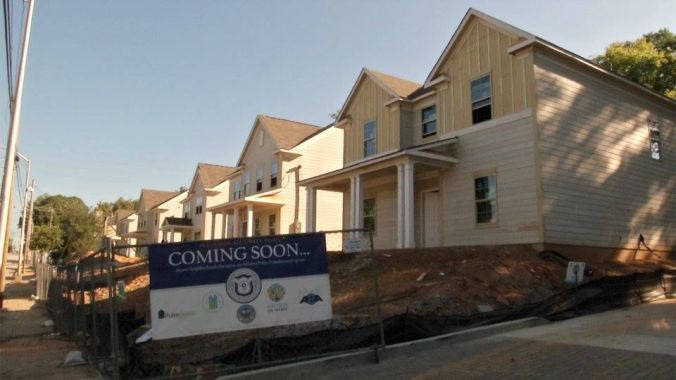
Another 10 homes are expected to be built as part of phase III in 2018. By 2020, the project will have constricted 35 new homes in downtown west.
 ATL Downtown West