
For decades, “The Bluff” was the defining term for two historic downtown west neighborhoods that once stood tall amongst giants, like Dr. Martin Luther King, Jr., Maynard Jackson, and Julian Bond. English Avenue is historically significant, but her story includes decades disinvestment. It is now the focus of revitalization efforts.
English Avenue, originally known as Western Heights, was established in 1891 as a white working-class neighborhood. Its name reflects its origins tied to the English family, and Simpson Road (now Joseph E. Boone Blvd) served as a racial dividing redline—white to the north, Black to the south.
Just south of that, Vine City emerged in the late 1800s as a predominantly African American neighborhood. It was home to a mix of social classes, including prominent figures like Alonzo F. Herndon, Atlanta’s first Black millionaire. Herndon built his residence there in 1910—a symbol of Black prosperity and aspiration.
Redlining, Segregation & Early Transitions
Following the Great Atlanta Fire of 1917, thousands of Black Atlantans were displaced, pushing many into Vine City and, increasingly, into English Avenue despite resistance and even violence targeting Black families moving north of Simpson Road.
In 1941, public housing projects—Eagan Homes and Herndon Homes—further altered Vine City’s demographic and land use. Simultaneously, English Avenue began its demographic shift: the formerly white-only English Avenue School, built in 1910, was re-designated as a Black school in 1951.
Mid-Century Heyday & Civil Rights Legacy
In the 1950s–60s, both neighborhoods thrived as middle-class African American communities. English Avenue boasted active commercial corridors; Paschal’s restaurant (est. 1947) became a well-known soul food landmark and civil rights hub. Martin Luther King Jr. moved to Vine City in 1967, and Coretta Scott King stayed there until 2004.

Decline: Blight, Disinvestment, and Crisis
From the 1970s onward, the neighborhoods suffered steep declines. White flight, suburbanization, and weak public investment hollowed out the community fabric. Vine City’s public housing deteriorated; English Avenue became known as “The Bluff,” infamous for crime and drug trade.
By the 1990s, foreclosures, abandoned homes, and environmental threats (such as flooding and lead-contaminated soil from slag) compounded the distress. In 2006, a tragic no‑knock raid killed Kathryn Johnston, an elderly Black woman, sparking outrage and scrutiny of police tactics.
Revitalization Efforts & Preservation
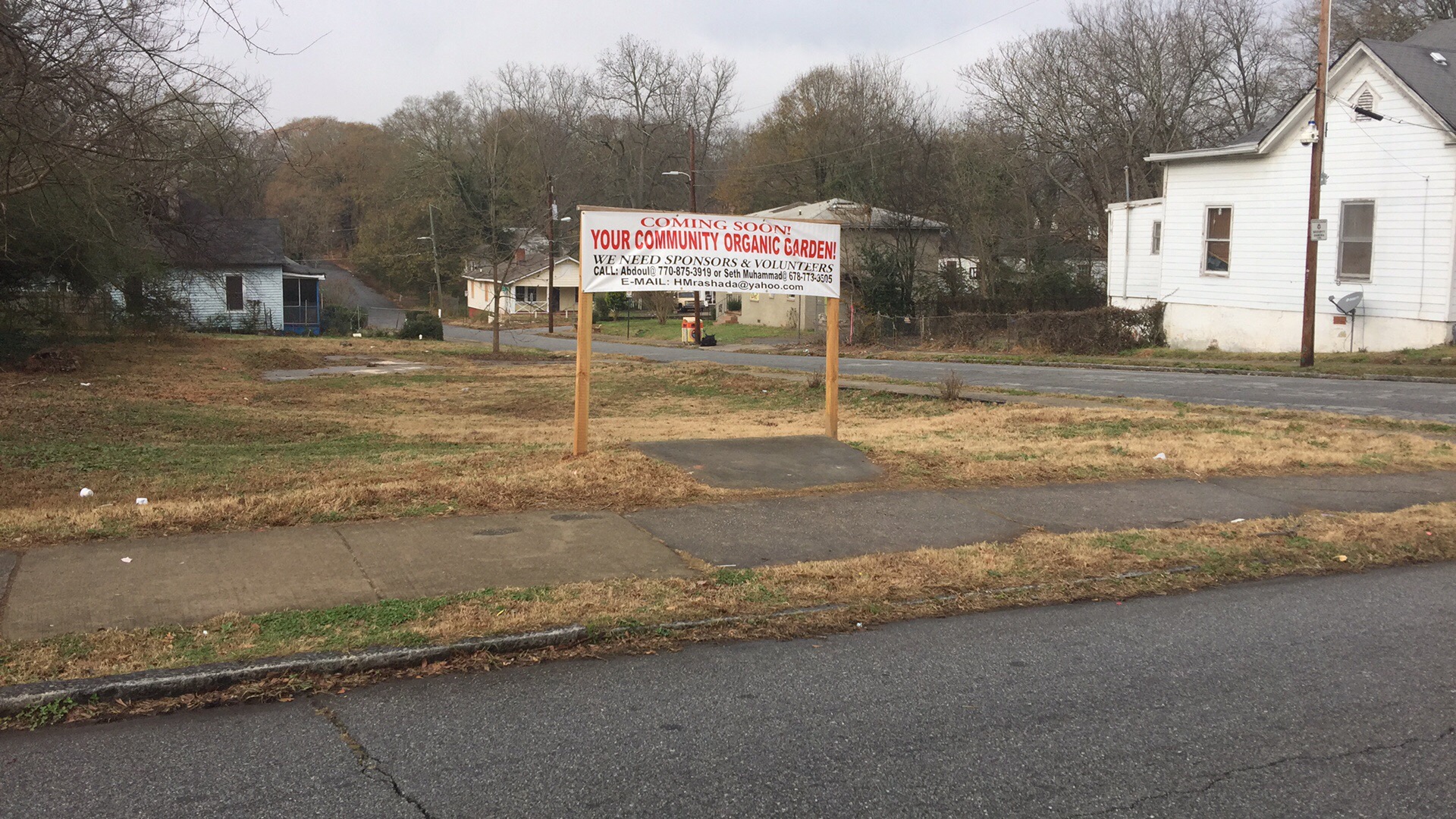
Since the late 1990s, public funding—like Atlanta’s Westside Tax Allocation District—has injected millions into redevelopment, though results have been uneven. Grassroots and faith-based organizations play leading roles today. Community-led CDCs, like those tied to churches, push affordable housing and local services, often up against speculation and embattled land ownership.
Notable infrastructure examples: Lindsay Street Park (opened 2015) brought greenspace to English Avenue. Kathryn Johnston Memorial Park (opened 2019) addressed flooding while serving as a tribute to her memory.
Historic preservation is gaining momentum. The English Avenue School was listed on the National Register of Historic Places in 2020, with plans to convert it into a community center. Likewise, St. Mark AME Church—a landmark in English Avenue—is receiving protection to stave off demolition and possibly become a restored civic hub.

Then & Now
| Era | Vine City | English Avenue |
|---|---|---|
| Early 1900s | Black prosperity, cultural elite | White working-class, segregated |
| Mid-century | Civil rights ties, strong Black community | Transition to Black middle class, civic potential |
| Late 20th c. | Disinvestment, blight, public housing decay | Crime, poverty, boarded homes, environmental threats |
| 21st century | Stadium development pressures, fragile revitalization | Community-led parks, preservation over demolition |
Legacy, Resistance, and Hope
Vine City and English Avenue illustrate the tragic arc of segregation-era prosperity, mid-century civic power, and subsequent decline under systemic racism, redlining, and neglect. Yet their story is far from static. Grassroots activism, environmental justice, historic preservation, and community-driven development all offer pathways toward equitable revitalization.
These neighborhoods embody both the scars of past policies and the enduring strength of community. Recognizing that progress can be a delicate balance between preserving identity and enabling growth is key to honoring what Vine City and English Avenue have always represented—resilience, history, and hope.
Institutional Timeline: Vine City & English Avenue
To further enrich our comparison, here is a historical timeline of key institutions and developments shaping the two neighborhoods. It highlights how institutions rose, faltered, and, in some cases, found renewed purpose.
| Year / Period | Vine City | English Avenue |
|---|---|---|
| Late 1800s–1910s | Residential development and early Black prosperity, including Alonzo Herndon building his home (1910) Wikipedia | Western Heights (renamed English Avenue)—school built in 1910 for white students Wikipedia+1 |
| 1920s–1940s | Growth due to displacement from 1917 fire; racial jump across Simpson Road despite violence Wikipedia | Continued overcrowding in school due to demographic shift Wikipedia+1 |
| 1941–1951 | Opening of Eagan Homes and Herndon Homes public housing, increasing Black population Wikipedia | English Avenue Elementary School re-designated as a Black school (1951) Wikipedia+1 |
| 1950s–1960s | Martin Luther King Jr. moves to Vine City (1967); vibrant Black middle class community Wikipedia | Paschal’s Restaurant opens (1947), serving as a civil rights hub Wikipedia |
| 1960 | — | School bombed (most severe racial incident in area) Wikipedia+1 |
| 1970s–1980s | Decline of public housing and community cohesion | Neighborhood becomes “The Bluff,” marked by abandonment and crime Wikipedia |
| 1995 | — | English Avenue School closes Wikipedia |
| Late 1990s–2000s | “Historic Westside Village” mixed-use development announced (1999), ultimately faltering; replaced by Walmart in 2013 Wikipedia | — |
| 2006 | — | Kathryn Johnston killed in police raid, sparking outrage and reforms Wikipedia+1 |
| 2015 | — | Lindsay Street Park opens—the first public park in the neighborhood Wikipedia |
| 2019 | — | Kathryn Johnston Memorial Park opens to mitigate flooding and honor her memory Wikipedia |
| 2020 | — | English Avenue School listed on National Register of Historic Places Wikipedia |
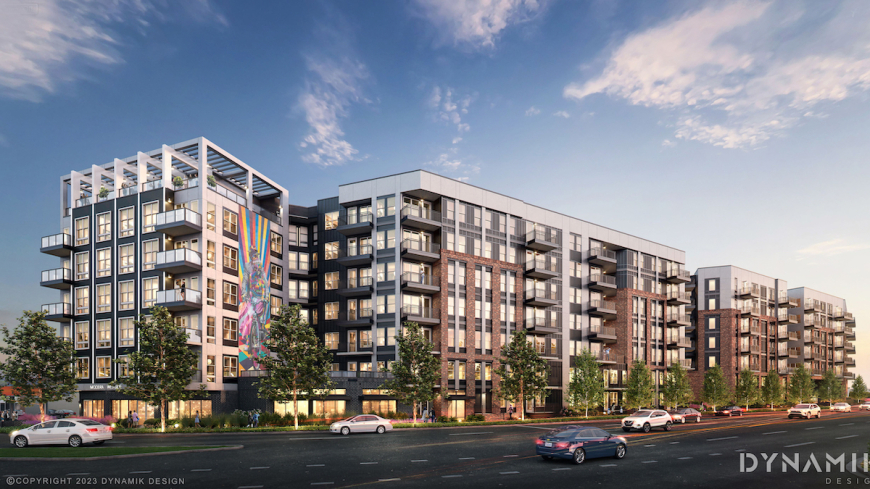
| 2020s | Ongoing redevelopment efforts guided by Vine City Redevelopment Plan (2004), supported via tax allocation and community groups YUMPU | Major affordable housing and mixed-use projects (e.g., Herndon Square, Proctor development) launching near BeltLine; developer interest growing Urbanize Atlanta |


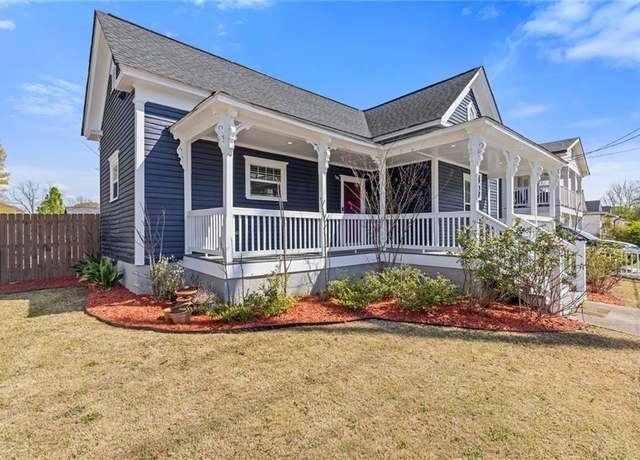




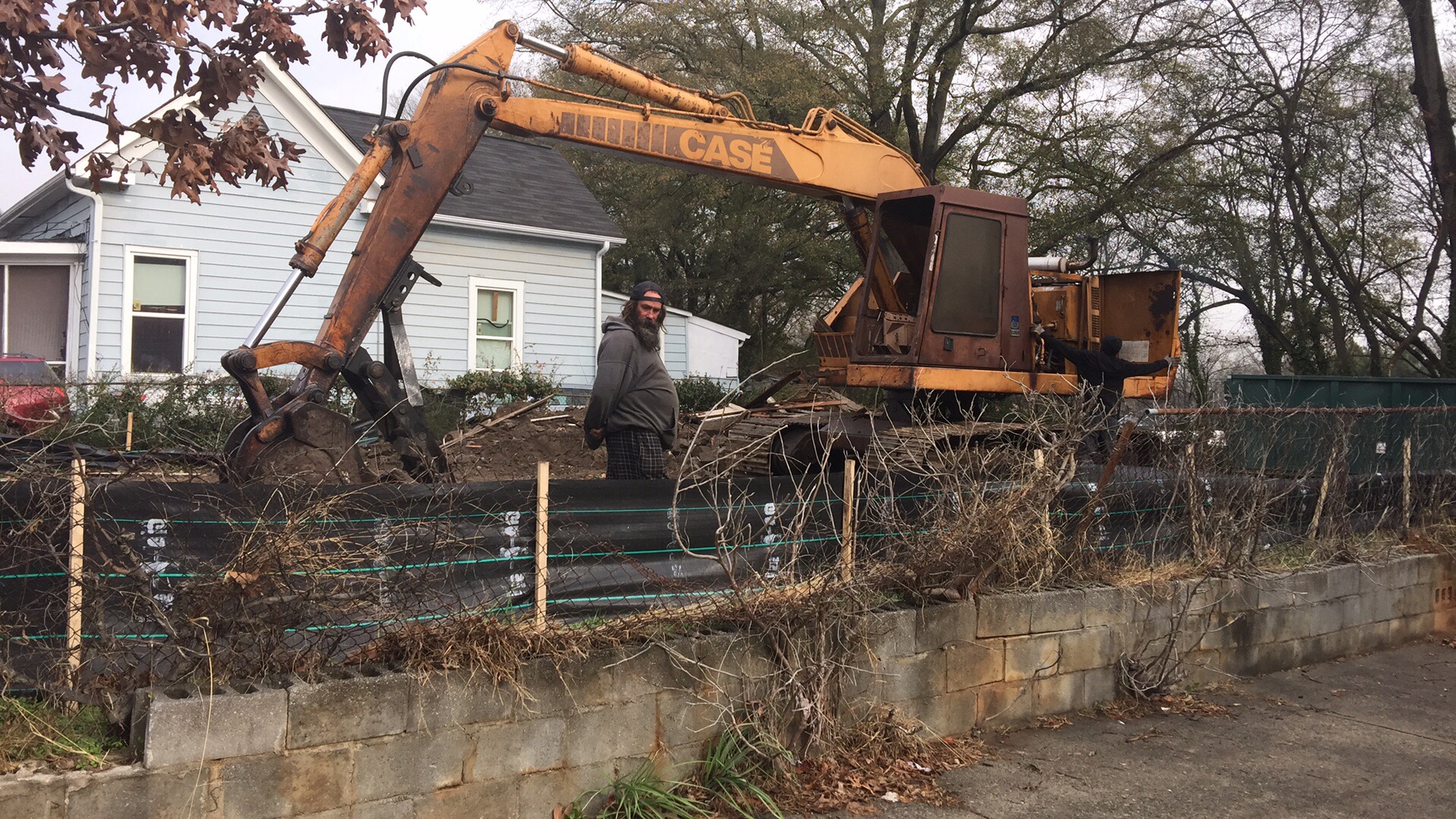
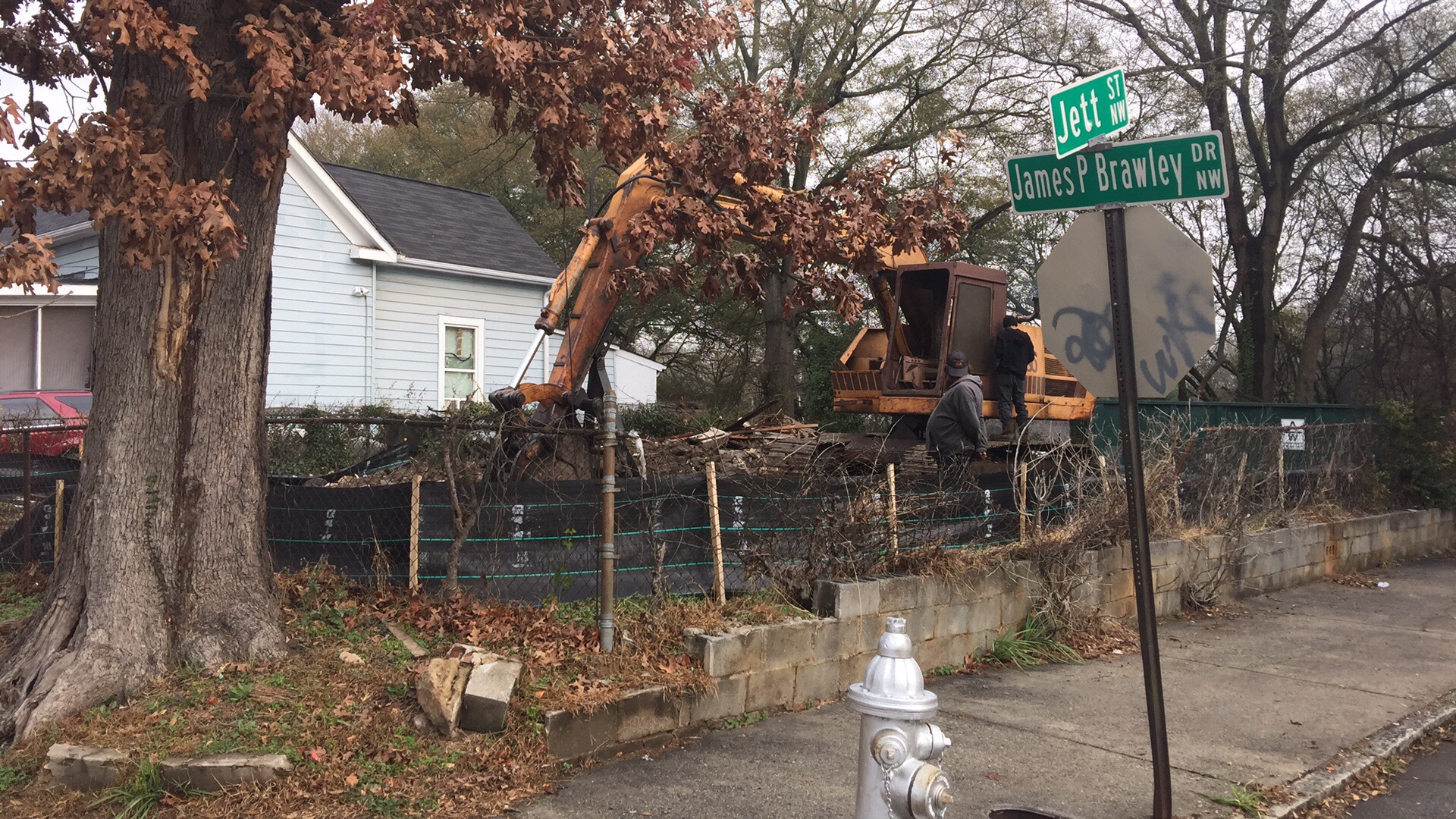

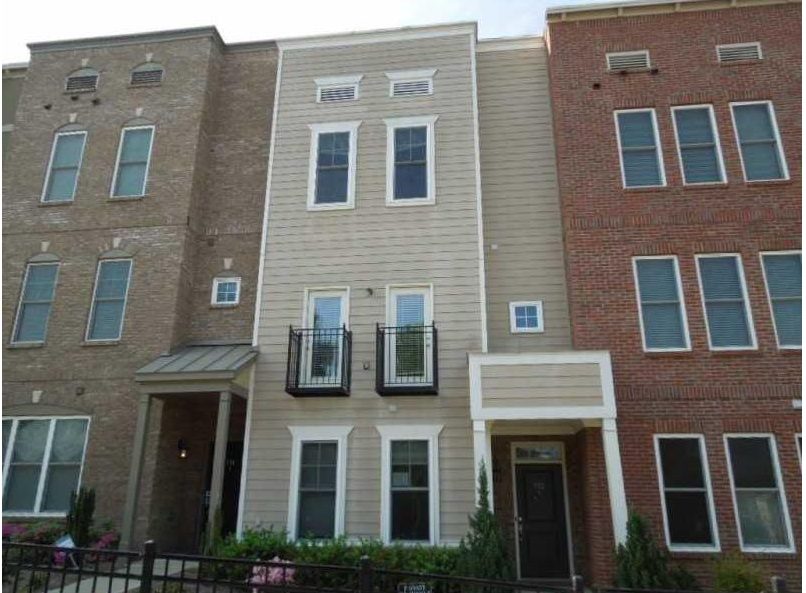

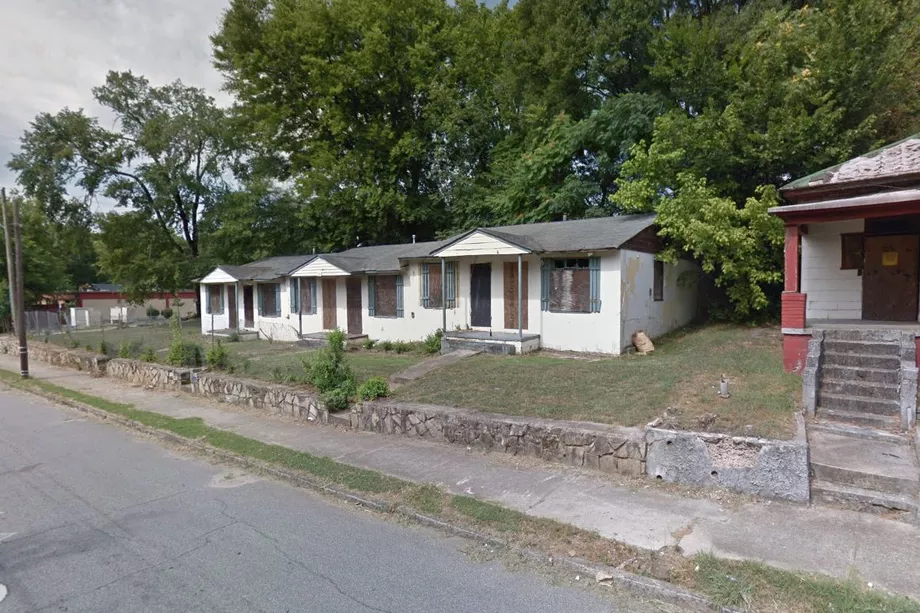
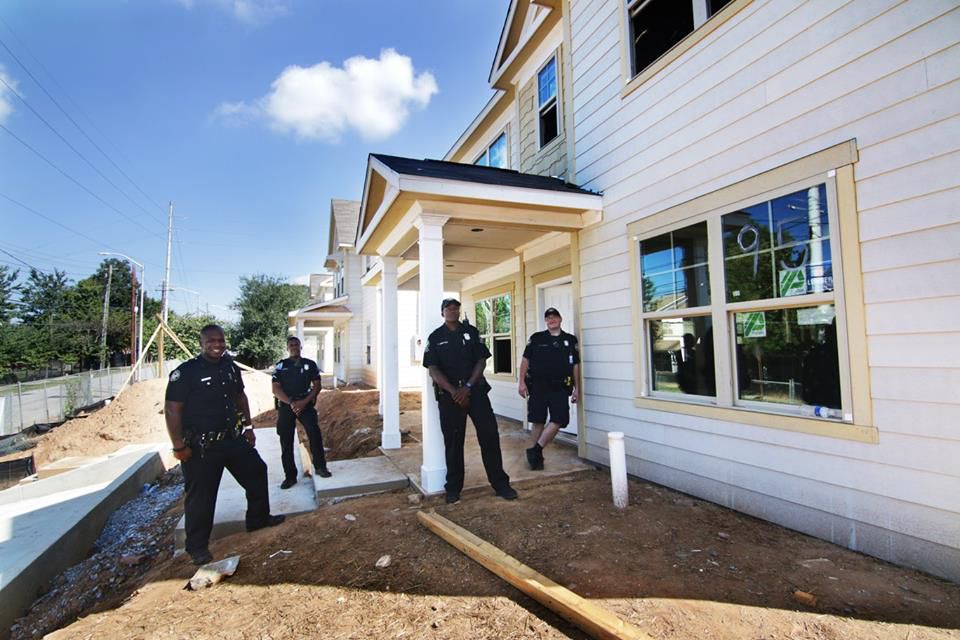 In addition to removing blight and adding new residents to the Historic Westside communities, the Secure Neighborhoods programs seeks to increase police visibility, build connections between police and neighbors, and provide housing options for officers. And its already seeing success; the Westside has seen a significant reduction in crime.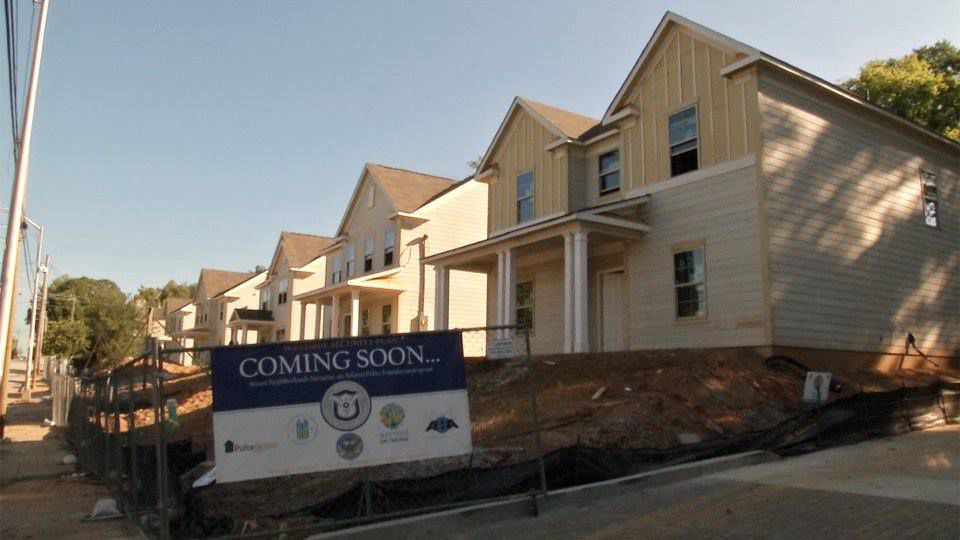
 ATL Downtown West